Roger Ahlstrom White II
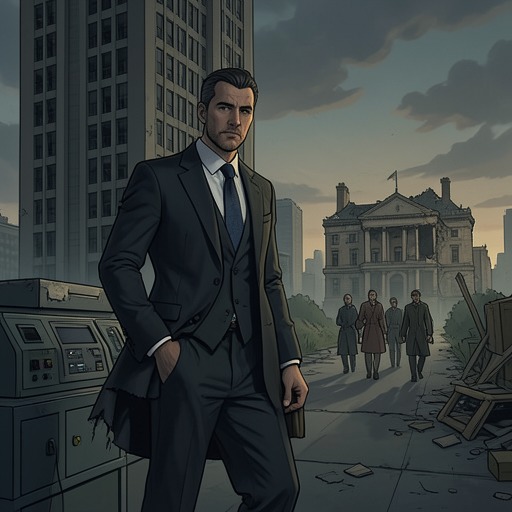
A Man in FullRoger Ahlstrom White II is an Atlanta lawyer whose identity is shaped by a nickname that turns his upbringing and politics into a test of racial belonging. During Freaknik, he watches young Black revelers take over stalled streets but cannot bring himself to join them; soon afterward, he crosses into Buckhead to meet Coach Buck McNutter about Fareek Fanon. The contrast makes his divided position visible: he is both an observer of Black Atlanta’s public life and a professional intermediary entering a wealthy white space.
Identity and Background
Roger’s full name came from his father, Roger Makepeace White, a pastor who admired the religious historian Sidney Ahlstrom. His father believed that a son sharing his first name should carry the suffix II, even if their middle names differed. Relatives first shortened the name to Roger Two. At Morehouse College, that familiar nickname was recast as Roger Too White, a barb that continued to intrude on Roger’s sense of himself.
His politics also carried his father’s influence. Roger arrived at Morehouse deeply shaped by his father’s admiration for Booker T. Washington and Washington’s argument that economic security should come before political and social equality. In the political atmosphere of the late 1970s, Roger recalls, Morehouse students were expected to align themselves with the legacies of the Panthers, CORE, SNCC, the BLA, and prominent Black activists. Gradualism could be treated as a betrayal, even though Roger insists inwardly that Washington was no Uncle Tom: Washington believed that economic achievement and community strength could compel white people to deal fairly, rather than relying on their goodwill. Roger’s conflict is not simply between two political positions; the nickname makes his inherited outlook feel like evidence against his racial authenticity.
Freaknik and the Name That Returns
On Freaknik Saturday, traffic on Piedmont Avenue grinds to a halt, and young Black revelers spill out of cars into the dusk. Roger watches from his Lexus. A girl climbs through the passenger-side window of a red Camaro rather than opening the door, then begins dancing in the street. In the middle of this scene, Roger Too White rises unbidden in Roger’s mind: the old name is not just an insult remembered from college but a label that reasserts itself while he watches a celebration he does not enter.
The traffic becomes a spectacle of Black youth, movement, and cars, but Roger remains behind his windshield. He imagines proclaiming the energy and wealth on display, and the fact that young Black Americans are in the driver’s seat. He loses heart before speaking or getting out. He has to reach Coach Buck McNutter’s home in Buckhead in less than twenty-five minutes, and McNutter is white. The missed declaration captures Roger’s split loyalties in action: he can formulate a forceful public defense of the scene, yet the demands of his appointment and professional life keep him in the car.
Crossing into Buckhead
Roger drives up the lawn at McNutter’s house, where a looping drive leads to the front door of a large, brightly lit home. On the way in, he remembers reports of Black men being stopped or detained by police and private security patrols for being Black near West Paces Ferry Road. His arrival is therefore shadowed by the knowledge that entry into this wealthy white corridor has not been equally safe for others.
McNutter answers the door at 7:42 on Freaknik Saturday. Although Roger has never met him, he recognizes the coach from television and The Atlanta Journal-Constitution. McNutter greets him warmly as Counselor Roger White and offers an enormous hand; Roger’s hand disappears into the grip, making him wince. The welcome is personal and outwardly cordial, but the scene retains its imbalance: Roger has entered McNutter’s domain to provide professional help.
The Fanon Case and Roger’s Role
McNutter explains that Fareek Fanon, McNutter, and Georgia Tech all have a problem. A young woman has accused Fareek of rape after a Freaknik party the previous night; McNutter describes it as a possible date-rape case and says Fareek insists he did nothing improper. Roger tells Fareek he has followed his publicized adventures, trying to establish rapport, but Fareek offers no answer and looks him over skeptically. McNutter then presses Fareek to identify the young woman.
Roger’s introduction to the case thus arrives through a collision of public attention, institutional stakes, and personal mistrust. He is asked to act as counsel in a crisis involving a prominent athlete, a university, and an accusation that McNutter says threatens them all. The same man who could not voice his imagined defense of Freaknik’s revelers is now expected to navigate a charged public matter from inside the established institutions around them. The available scenes leave that tension unresolved: Roger’s old nickname persists, while his work requires him to move between worlds that do not confer belonging on the same terms.